

This was barren when we first arrived and has slowly evolved in to the space you see now.
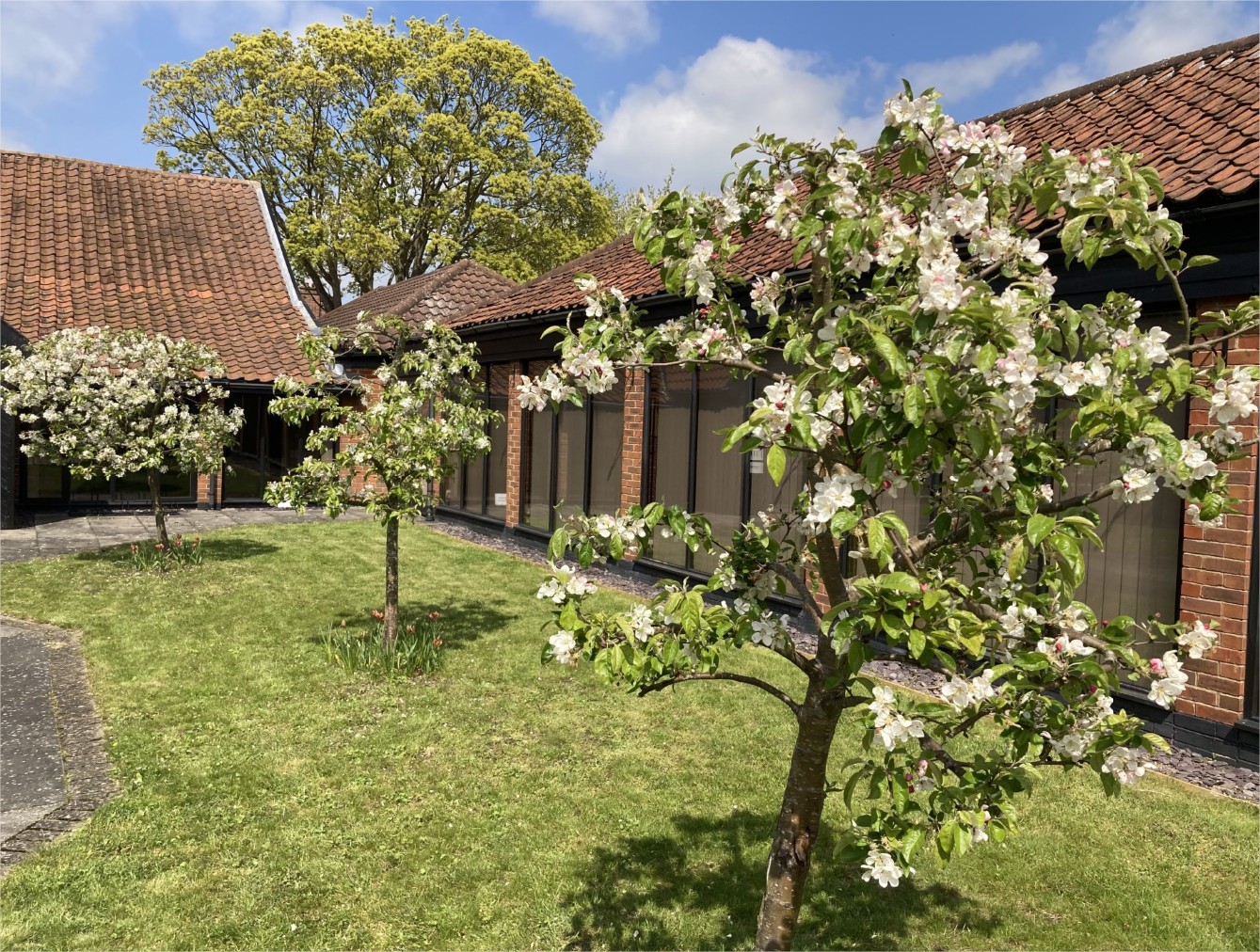
There was pressure to use it as more car parking but we resisted, grassed it over and planted Crab Apple trees (and a time capsule) in 2012.
The Crab Apples look fantastic all the time and especially when in blossom in spring. The grass is not mowed until May but there are plans to make it even more wildlife-friendly by reseeding as a wildflower meadow. Help again from Cathy Smith and the results will be revealed next spring.
” The existing grass by the entrance could be managed as a flowering lawn. 230306 RSWT Wild about Lawns_Booklet 2023 web no logo.pdf . They are already a number of wildflowers in the sward which with a high cut on a monthly basis should be able to flower and set seed.
Examples of wildflowers which can be encouraged through this management include: dandelions, daisies, germander speedwell, red deadnettle, ground ivy, self-heal, clovers and trefoils and low growing geraniums such as Dove’s foot crane’s bill. Some of these are already in the sward so all that would need to be done is to reduce mowing frequency to every 3-4 weeks. If the sward is tall, then a collection box will help prevent a mulch developing which can lead to a reduction in wildflowers.
Where the slate chippings are the two most likley options would be either a wildflower mix with a small percentage of cornflower annuals, see Cornfield Annuals as Nurse Cover or potentially a pictorial meadow mix Pictorial Meadows – Designed by Experts to be Stunning and Resilient . The latter are designed mixes of garden plants, aimed to be people pleasing but can be considered ‘gate way’ plants.
Further information on creating and managing wildflower meadows can be found on our website Meadows and grassland | Suffolk Wildlife Trust . This publication may also be of interest The-Good-meadow-guide-Plantlife.pdf . Other Garden wildlife booklets can be found Wildlife gardening guides | Suffolk Wildlife Trust“.
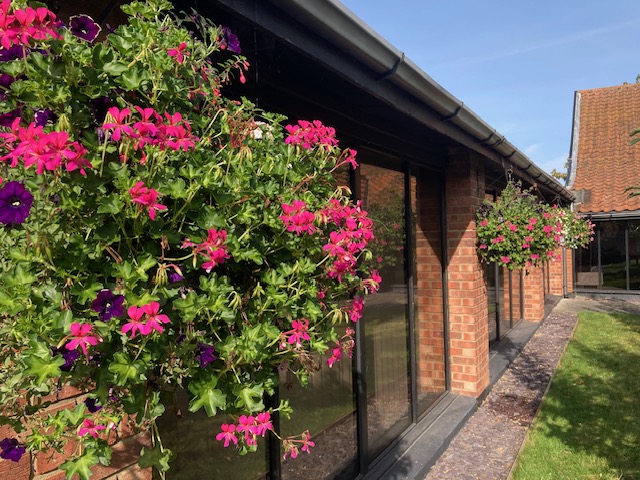
We have always had spectacular hanging baskets courtesy of Deans Nurseries. These were tweaked in 2025 to be more insect friendly following advice from the brilliant Cathy Smith, Conservation Advisor at Suffolk Wildlife Trust …
” A few suggestions of pollinator friendly plants for hanging baskets: Calibrachoa, Million bells, attractiveness varies between cultivars. In one study red and blue cultivars were preferred by bumblebees, might be worth a try. Ivy leaved pelargoniums have some limited value to pollinators, those able to reach the nectar, most often reported are hummingbird hawk moths. Argyrantheum, marguerites, are reputedly offer forage to pollinating insects.
Salvia greggii, and Salvia elegans-tender salvias are reputedly attractive to pollinating insects as is Salvia farinacea. Salvia officinalis common sage, Salvia nemerosa – a herbaceous perennial is also good but may not be suitable for baskets. Thyme and rosemary can both be used in hanging baskets and are attractive to wild bees as can nasturtium and some penstemons.
Much of the online information about plants for pollinators is rather broad and research evidence lacking, often the only way is to trial plants and see what works best. Last year, I noticed that Pentas lanceolata or Egyptian Star, a bedding plant, despite its’ origins was particularly attractive to bees, so could be worth a try.”